Liberia Moves to Expand Healthcare Access Through UHI
Author: Claudius T. Greene, Jr. 丨Source : Daily Observer Newspaper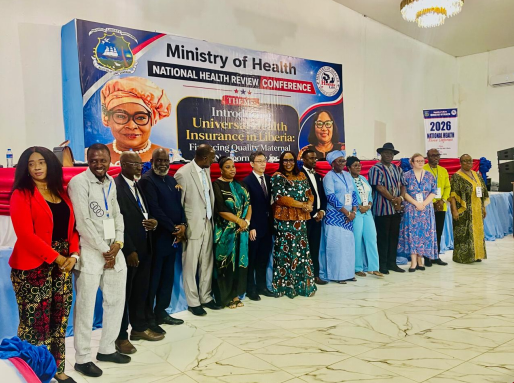
PAYNESVILLE, Montserrado County — The Government of Liberia has reaffirmed its commitment to introducing Universal Health Insurance (UHI) as a key intervention to improve access to quality healthcare services and reduce preventable maternal and newborn deaths across the country.
The commitment was emphasized during the 2026 National Health Conference, held from August 4–6 at the Paynesville City Hall under the national theme: “Introducing Universal Health Insurance in Liberia: Financing Quality Maternal and Newborn Care for All.”
The conference brought together government officials, health sector leaders, development partners, healthcare workers, civil society organizations, and other stakeholders to discuss sustainable financing mechanisms and strategies to improve maternal and newborn survival.
Delivering the keynote address on behalf of First Lady Madam Kartumu Yarta Boakai, Senior Advisor Dr. Adam M. Kyne said Universal Health Insurance must serve as a catalyst for protecting the lives of mothers and children by ensuring that access to healthcare is not determined by a person’s income, location, education, or social status.
Speaking on the topic “UHI as a Catalyst for Maternal and Newborn Survival,” Dr. Kyne said no nation can describe itself as healthy while mothers continue to die during childbirth and newborns lose their lives before having a fair opportunity to survive.
“Healthcare delayed can become life denied. Healthcare unaffordable can become healthcare inaccessible, and healthcare inaccessible can become a death sentence for the poor,” Dr. Kyne said.
He explained that the First Lady believes maternal and newborn health is not only a women’s issue but also a national development, economic, justice, and human dignity concern.
“When a mother dies, a family loses its center. When a newborn dies, a nation loses a future it never had the opportunity to know,” he stated.
Dr. Kyne said Universal Health Insurance should move healthcare delivery from privilege to protection and from uncertainty to assurance by ensuring that every Liberian, especially vulnerable populations, can access quality health services when needed.
He called for increased investment in maternity wards, referral systems, essential medicines, healthcare workers, and health facilities across all counties.
According to him, a strong health system must not wait until a mother develops complications before providing care, but must anticipate risks, prepare healthcare providers, prevent avoidable deaths, and respond quickly when emergencies occur.
Dr. Kyne also urged policymakers to match health commitments with adequate financial resources, stressing that “a policy without resources is a promise without power.”
He further encouraged communities to support women in seeking early antenatal care, promote skilled deliveries, reject harmful practices, and ensure that fathers recognize pregnancy and childbirth as family responsibilities.
Meanwhile, Health Minister Dr. Louise M. Kpoto said the introduction of Universal Health Insurance comes at a critical time when many Liberian families continue to make difficult decisions between seeking healthcare and meeting other basic needs.
Dr. Kpoto said UHI will help strengthen Liberia’s health system by ensuring that access to quality healthcare is based on need rather than the ability to pay.
“This Universal Health Insurance, once implemented, is going to help build our health system. It is going to protect every Liberian, especially the most vulnerable,” she said.
The Health Minister explained that the annual health conference provides an opportunity for stakeholders to reflect on progress, confront challenges, and make decisions that will improve the wellbeing of Liberians.
She praised the leadership of President Joseph N. Boakai for placing health among the nation’s development priorities and extended appreciation to development partners, county health teams, healthcare workers, civil society organizations, and private sector actors for their contributions to improving Liberia’s health sector.
Dr. Kpoto noted that Liberia has made progress over the past year through strengthened primary healthcare services, expanded access to essential medicines, investments in the health workforce, improved disease surveillance, and intensified efforts to reduce maternal and newborn deaths.
However, she cautioned that significant challenges remain.
“Too many women are still dying from preventable deaths. Too many newborns are not surviving their first month of life. These are not just statistics; they are lives, they are families, and they are our futures,” she said.
Dr. Kpoto challenged participants to ensure that the outcome of the conference goes beyond discussions and presentations, urging them to develop practical solutions, strengthen accountability, and commit to actions that will improve healthcare delivery in hospitals, clinics, and communities.
The World Health Organization (WHO) Resident Representative to Liberia, Dr. Olushayo Olu, commended the Government of Liberia and the Ministry of Health for their continued commitment to improving access to essential health services and advancing the wellbeing of Liberians.
Representing the United Nations Country Team in Liberia, Dr. Olu said the theme of the conference demonstrates the government’s commitment to strengthening health financing and ensuring better health outcomes, particularly for women and children.
He praised Liberia’s commitment to the West and Central Africa Regional Roadmap for Accelerating the Reduction of Maternal and Neonatal Mortality and Morbidity, noting that the initiative could help accelerate progress toward the country’s target of reducing maternal and neonatal mortality by 40 percent by 2029 under the ARREST Agenda for Inclusive Development (AAID).
Dr. Olu said the WHO and the wider UN system are encouraged by Liberia’s plan to introduce Universal Health Insurance, describing it as a critical step toward achieving sustainable health financing and Universal Health Coverage.
“This important reform can help reduce financial barriers to healthcare and contribute to equitable access to quality health services for all citizens,” he said.
He assured stakeholders that the One UN team remains committed to supporting Liberia’s efforts to strengthen health financing, improve maternal and newborn outcomes, and build a more resilient healthcare system.
Also speaking at the conference, a representative of the United States Centers for Disease Control and Prevention (US CDC) said the gathering provides an important opportunity to reflect on progress made, share lessons learned, and identify innovative solutions to strengthen Liberia’s health system.
The CDC representative said the organization remains proud to partner with the Government of Liberia, the Ministry of Health, the National Public Health Institute of Liberia, county health teams, healthcare workers, and other partners in advancing evidence-based public health interventions.
According to the representative, continued collaboration, local leadership, and shared commitment are essential to creating a health system that is equitable, sustainable, and capable of serving every community across Liberia.
The CDC official encouraged participants to actively engage in discussions and develop practical recommendations that will improve health outcomes for Liberians.
Meanwhile, the representative of the Embassy of Ireland in Liberia said the conference reflects the government’s understanding that improving healthcare requires attention to both major policies and practical details.
The Irish representative praised Liberia’s ability to respond to health emergencies while building stronger systems for long-term healthcare delivery.
She said Universal Health Insurance could become an important part of the solution by helping more Liberians, particularly mothers and infants, access the care they need.
The Irish diplomat highlighted Ireland’s long-standing support to Liberia’s health sector through initiatives such as the Health Basket Fund and the NET program implemented jointly with UNFPA and UNICEF.
She recounted visiting health facilities where maternal healthcare providers trained through these programs are making significant contributions to saving lives.
The representative praised the commitment of Liberian nurses and midwives who continue to provide care for mothers and babies despite challenges, saying their work demonstrates the importance of partnerships in improving health outcomes.
She stressed that while childbirth should be a moment of joy, inadequate healthcare can turn it into a period of fear and grief.
“Because of the actions of people in this room over the next few days, fewer women in this country will die in childbirth,” she said.
The Irish representative assured the Government and people of Liberia of Ireland’s continued partnership as the country works to make healthcare more accessible for all.
The three-day National Health Conference is expected to produce recommendations aimed at strengthening health financing, expanding access to quality maternal and newborn care, and advancing Liberia’s progress toward Universal Health Coverage.
Stakeholders at the conference emphasized that protecting mothers and newborns requires collective action, sustainable financing, stronger healthcare systems, and continued commitment from government, partners, healthcare workers, and communities.