Liberia Launches Nationwide School Hygiene Kits Program
Author: Claudius T. Greene, Jr. 丨Source : Daily Observer Newspaper
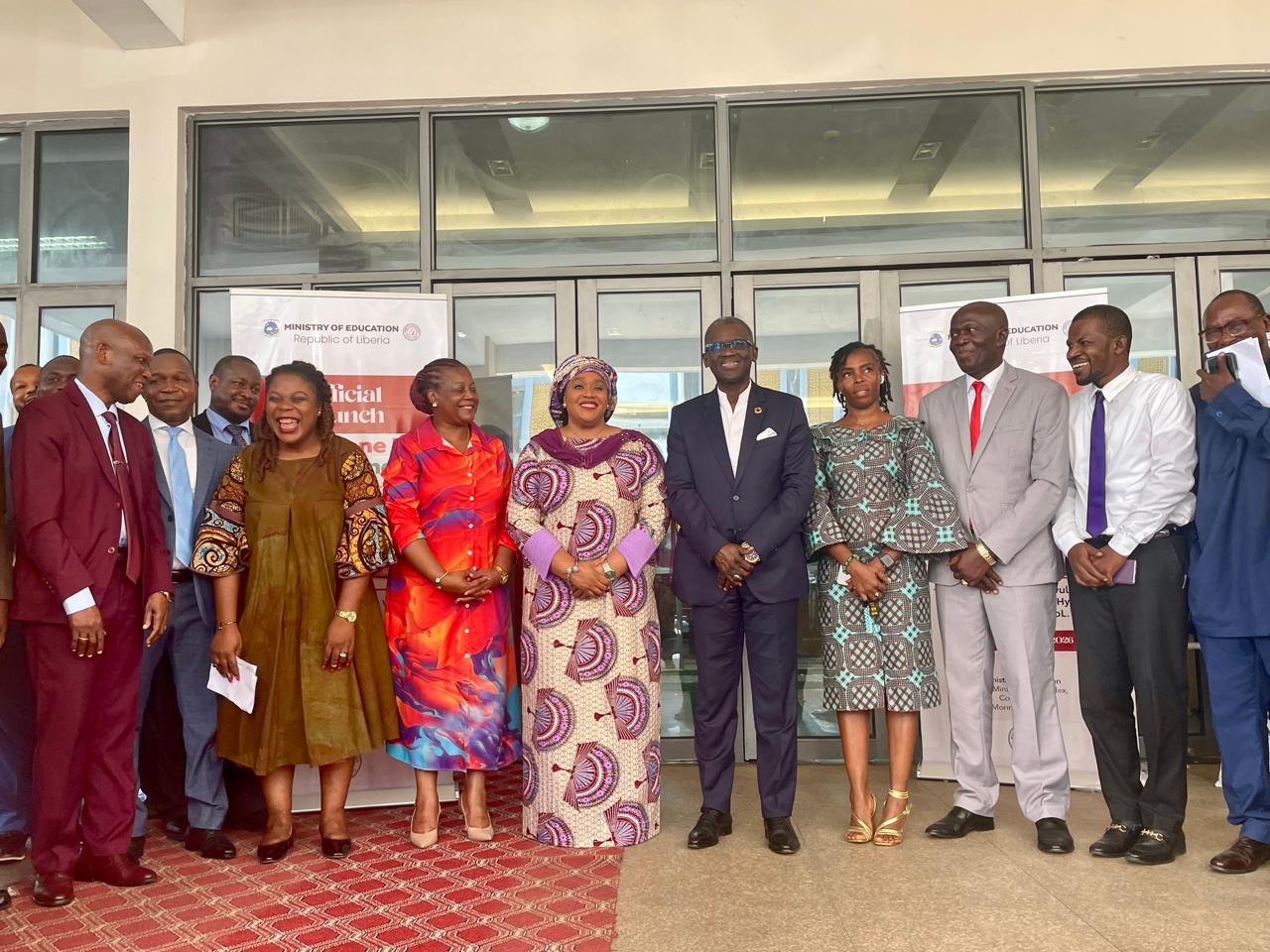
Caption: Stakeholders pose for photo after the launch at the Ministry of Education.
Congo Town, Liberia- The Government of Liberia, through the Ministry of Education (MoE), has officially launched a nationwide School Health and Hygiene Kits Distribution Exercise, targeting 10,000 at-risk students in vulnerable communities, in a bold effort to reduce school absenteeism, protect student dignity, and improve learning outcomes.
The initiative, which will benefit 5,000 girls and 5,000 boys, is fully funded by the Government of Liberia under the Public Sector Investment Program (PSIP) and is being implemented with strong support from development partners, including the United Nations Population Fund (UNFPA).
Speaking at the launch ceremony in Monrovia, Education Minister Dr. Jaso M. Jallah said the program is rooted in a simple but urgent principle: learning depends on dignity, health, hygiene, and presence.
“When these are compromised, education is interrupted,” Minister Jallah declared. “Across our schools, there are students who are enrolled, capable, and eager to learn, yet whose schooling is repeatedly disrupted by preventable circumstances.”
Minister Jallah explained that poor hygiene and lack of menstrual health support have long remained hidden but powerful barriers to education in Liberia, contributing to missed lessons, learning loss, and, in many cases, permanent disengagement from school.
For adolescent girls, she noted, the absence of menstrual hygiene materials often leads to repeated monthly absences, increasing the risk of falling behind academically and eventually dropping out. For boys, poor hygiene contributes significantly to preventable illnesses—particularly gastrointestinal and respiratory infections which remain among the leading causes of school absenteeism.
“These are not marginal issues,” she emphasized. “They directly shape attendance, participation, and educational outcomes.”
Inclusive Support for Girls and Boys
According to the Minister, the hygiene kits are designed to meet the distinct needs of both girls and boys, reflecting the Ministry’s commitment to inclusion.
Each girl’s kit contains sanitary pads sufficient for six months, along with essential hygiene items such as toothbrushes, toothpaste, deodorant, combs, and other personal care materials. Boys’ kits include hygiene supplies aimed at promoting daily cleanliness and reducing preventable illnesses.
Minister Jallah revealed that the decision to include boys was informed by direct engagement with students during nationwide school visits.
“The boys told me, ‘Minister, every time there are interventions in schools, it’s always about girls, and we are left out.’ This initiative is our way of saying: we did not forget you.”
She added that communities with high student attrition rates where learners frequently drop out will be prioritized in the distribution process.
UNFPA Strengthens Menstrual Health Support
UNFPA Liberia Country Representative Dr. Mady Biaye described the launch as more than a logistical milestone, calling it a declaration of value.
“By launching this exercise, the Ministry of Education is sending a powerful message that a child’s health, dignity, and education must not be interrupted by the natural processes of growing up.”
Dr. Biaye highlighted the global challenge of period poverty, noting that data suggests girls can miss up to 20 percent of the school year due to lack of menstrual supplies—absences that often lead to lower academic performance and higher dropout rates.
“When a girl drops out of school,” he warned, “her vulnerability to child marriage, early pregnancy, and gender-based violence increases.”
UNFPA announced it will complement the government’s effort by installing pad dispensers in schools and supplying additional menstrual health products, alongside continued support for Comprehensive Sexuality Education (CSE) and life-skills training.
Whole-of-Government and Community Approach
The initiative enjoys broad inter-ministerial support. Gender Minister Hon. Gbeme Horace Kollie praised the program as aligned with Liberia’s Children’s Law, National Gender Policy, and global commitments under the Sustainable Development Goals.
Citing UNESCO and ActionAid Liberia data, Minister Kollie noted that more than 60 percent of girls in rural and semi-urban areas lack access to basic menstrual hygiene materials, forcing many to rely on unsafe alternatives or stay away from school.
“This program reinforces the truth that menstrual health is an issue of dignity, equity, and educational continuity,” she said.
Montserrado County Education Officer Hon. Amanda Zota described the initiative as timely and transformative, stressing that a healthy child learns better.
“No child should be denied education because of preventable health and hygiene challenges,” she asserted.
Implementation and Expected Outcomes
Acting Assistant Minister for Student Personnel Services Gregory Stubblefield said the program aims to reduce absenteeism, strengthen school health practices, and foster a culture of hygiene and self-care across Liberia’s schools.
Assistant Minister for Basic and Secondary Education Abba G. Karnga, Jr. added that the initiative was personally conceived by Minister Jallah out of a deep commitment to student welfare and retention, particularly for girls.
“This program recognizes that when students feel clean, comfortable, and confident, they learn better and stay in school longer,” Karnga said.
The distribution will be carried out in collaboration with school administrators, guidance counselors, parents, and community leaders to ensure transparency, proper use, and sustained impact.
Protecting Learning Time, Investing in the Future
Minister Jallah concluded that the success of the program will not be measured merely by the number of kits distributed, but by improved attendance, sustained participation, and uninterrupted learning.
“This is how we protect learning time. This is how we support dignity in education. And this is how we invest responsibly in Liberia’s future.”
With that declaration, she officially launched the School Hygiene Kits Distribution Exercise, committing the Ministry to ensuring that no child is left behind because of preventable hygiene challenges.